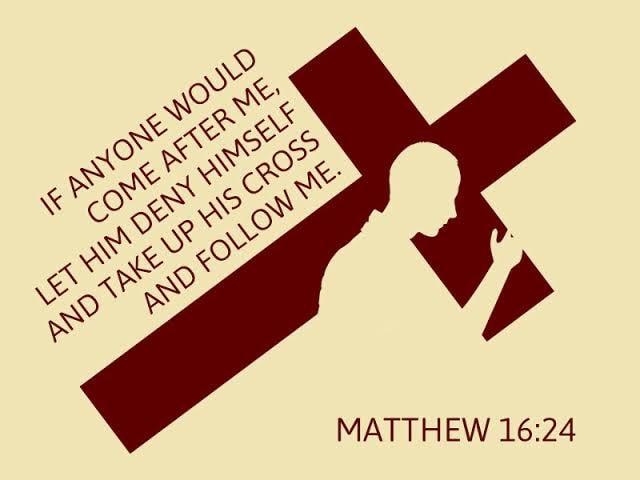
Follow Jesus: Covered in dust

“After coming down with them, He stood on a level place with a large crowd of His disciples and a great number of people from all Judea and Jerusalem and from the seacoast of Tyre and Sidon. They came to hear Him and to be healed of their diseases; and those tormented by unclean spirits were made well. The whole crowd was trying to touch Him, because power was coming out from Him and healing them all.”

Luke 6:17-19

There is a distinction made in this set of verses that we might easily miss.

A large crowd of His disciples.

A great number of people.

Jesus was a rabbi (teacher / master). A rabbi’s talmidim (disciples) followed him everywhere, learning everything they could from him, and serving him. They hung on his every word, and it is said that they followed so closely, they would become covered in the dust of their rabbi’s feet. They imitated him in everything, and then, when ready, they became a rabbi and had their own disciples. Jesus had a large crowd of disciples – some who would walk away when He said hard things. Those who remained were scattered at His crucifixion, and were perhaps all present in the upper room at Pentecost. But I wonder if only twelve of them had His dust on them.

And then, there was the great number of people who came to hear Him speak, and receive healing and deliverance from Him. They came to get something they desperately needed, from a man who had power coming out of Him, and who can blame them? But the same crowds who gathered to get what He had to give, are the same one who later called for His crucifixion.

You may think the question all of this poses is, which are you – are you in the large crowd of His disciples, or the great number of people? That is not my question, but you are free to search your heart for an answer anyway.

The real question that this creates for me is this: Am I still learning from Jesus? Is He still the one teaching me to walk in His ways, to trust Him above all others, including myself, to believe for things others have stopped believing for? Do I follow Him, or do I follow the crowd who follows Him?

I believe that many, if not most, of those in the large crowd of disciples were saved. I also believe its possible that many who were in the great number of people were also saved. I think some people follow from a distance, and some follow closer.

I just want to be covered in His dust, day in and day out.

Marriage Matters—Choose Your Battles

Very few battles are worth fighting or even winning. Stop and think about the last real argument you had with your spouse. I mean the argument that caused one of you to get hurt or brought a cold silence that lasted for at least a day. Do you even remember what it was about? Was it worth it?

After almost 40 years, many of which were lived at war with my husband, I have learned a few hard lessons:

♥ Very few arguments are worth the price of peace that is paid to win them.

♥ Being right is a small consolation when it damages my friendship with my spouse.

♥ Winning an argument is a much smaller victory than the victory of giving up my need to win it.

♥ Not every battlefield needs to have my flag on it.

♥ It’s harder to stop a battle in motion than it is to walk away before it begins.

♥ Marriage battles are generally fought with words, and our tongues are hard to control once they are loaded for battle. Our words used to win an argument often lead us to long-term regret and not much else.

So what are the battles worth fighting? First, I think that question needs to be posed to God. He alone knows. The best I can do is give you my opinion on two good questions to ask yourself and the Holy Spirit.

? Will someone else be harmed if I don’t fight this particular battle, especially someone in my family?

? Will not engaging in this conflict result in my disobedience to God’s word, or compromise my walk with Christ in any way?

Hopefully, your answers to those questions will serve as guardrails in your decisions in conflict. I absolutely believe there are times when we should dig in our heels, but when we do, we should be quite certain that God is dug in with us. But most of the time, we should back down. If my husband is asking me to rob a bank with him, that will be a hard no from me, and I will not be moved from that position. But if I think we need to have a go ’round because he won’t do his fair share around the house, even after numerous “discussions”, then I’m gonna have to count the actual cost of going to battle over it rather than just letting it go.

Those are simple and easy scenarios, and not based on real events, but our lives are much more complicated than that, I know. So please allow me to submit this for your consideration:

Choose your battles well, my friend, and remember that more often than not, no battle at all is the best choice.

Follow Jesus: With Open Eyes

Don’t you have a saying, ‘Four more months and then the harvest’? Well, what I say to you is: open your eyes and look at the fields! They’re already ripe for harvest! 

John 4:35 (CJB)

Jesus said this to His disciples right after His encounter with the woman at the well. In fact, they were still at the well, in Samaria, when He said it. To catch the impact of His statement, we have to know the relationship between Jews and Samaritans.

Jews hated Samaritans. Samaritans hated Jews. Jews would cross the Jordan river to avoid going through Samaria.

And this was the harvest field Jesus told His disciples to open their eyes to see. What caught my eye (no pun intended, but yay me for making one), is that Jesus didn’t open their eyes, He told them to open their own eyes. To stop looking at things from an earthly perspective, and look at it from heaven’s viewpoint.

There is a harvest in front of us that is ripe, but it is not just among the people we like, the people that are basically like us, but unsaved. It is a harvest made up of the people we avoid. The people we judge. The ones we don’t want anything to do with. I don’t need to name them, I think we all know who we go out of our way to avoid coming in contact with.

Then Elisha prayed and said, “O Lord, please open his eyes that he may see.” So the Lord opened the eyes of the young man, and he saw, and behold, the mountain was full of horses and chariots of fire all around Elisha.

2 Kings 6:17 (CSB)

Elisha’s servant had looked out his window in the morning, and saw the King of Aram’s massive army surrounding them. In fear, he asked Elisha, “what are we going to do?”.

Have you looked out your window lately? Sometimes, it seems like the army of darkness that has been amassing grows with each passing day. Somedays, I have Elisha’s faith. Other days, I have his servant’s fear. And no matter how hard that servant may have tried, he couldn’t open his own eyes wide enough to see what was really there.

 “I pray that He will give light to the eyes of your hearts, so that you will understand the hope to which He has called you

Ephesians 1:18 (CJB)

I think the early disciples, including (and especially) Paul, had the eyes of their hearts open and full of light. Why do I think that? Because they were all-in, to the death. Earth had nothing for them.

I wonder if earth still has too much for us. Too many things to distract us, to compete for our affections and our allegience. Things that block our view of eternity.

“For you used to be darkness; but now, united with the Lord, you are light. Live like children of light…” (Ephesians 5:8)

I pray that we, the Church (mostly me tho), will open our eyes and see the harvest that we avoid.

I pray He will open our eyes to see who is with us, when all we can see is what is standing against us.

And I pray that we will live with nothing blocking our view of eternity; as those for whom earth has no hold, because He has brought His light to the eyes of our heart, and now we understand the hope that is ours in Christ.

May we follow Jesus with open eyes.

Follow Jesus: See & Tell

John the Baptist: I have seen and testified that this is the Son of God. (1:34)

Andrew: The first thing Andrew did was to find his brother Simon and tell him, “We have found the Messiah” (that is, the Christ). And he brought him to Jesus. (1:41)

Philip: Philip found Nathanael and told him, “We have found the one Moses wrote about in the Law, and about whom the prophets also wrote—Jesus of Nazareth, the son of Joseph. (1:45)

Samaritan woman: “Come, see a man who told me everything I ever did. Could this be the Messiah?” (4:29)

Man at the Pool: The man went away and told the Jewish leaders that it was Jesus who had made him well. (5:15)

Those living in darkness were seeing a great light, and their response was to tell others, and bring others to that light.

Sometimes we complicate things, you know? We make Christianity about us and ours. Our church. Our doctrine. Our style of music. Our programs. Our ministry. Our ideas and preferences and need to do things our way.

I think some of us just need to tell someone about Jesus.

Do we still believe that there is power in the gospel? That the message of the cross is foolishness to those who are perishing, but to us who are being saved it is the power of God? (1 Corinthians 1:18) 

Do I believe it? Do I believe that the gospel that comes forth as I share my testimony has the power of God on it? Or have I, we, become far more comfortable inviting people to church, or to an outreach event, than we are inviting them to know Jesus through our own story?

Bringing someone to church isn’t bringing them to Jesus. I will stand by that statement, as offensive as it may sound. Inviting people to come to church isn’t wrong, or a bad thing. But it isn’t the model we have been given in the scriptures. The picture we have is that people encountered the Messiah, and then went to tell someone what they had seen, often bringing them back to Jesus. And when Jesus left the earth, we see the disciples going out and doing the “greater things than these” that Jesus spoke of in John 14:12-14. And all those people who believed in the Jesus they were being told about, became the Church. Today, those who believe in the Jesus we’ve seen and tell them about, become the Church.

People were seeing and telling long before Jesus told them to go make disciples of all nations. But we’ve made that great commission our flagship scripture for so long that “missions” is now where people are told about Jesus. Why tell my neighbor about the life changing encounter I had with Jesus, when I can invite them to an outreach event at church instead. Something safe. Unintrusive. Non-threatening. I wonder. If we truly believed our theology of heaven and hell, would we care about being unintrusive? I wonder if it’s time for the Church to get intrusive. Become threatening to the schemes of the devil. Walk in the power of the Holy Spirit to be His witness as we go, everywhere we go.

We have seen. We have seen Him in our lives. So let’s be followers of Jesus and tell someone. Let’s invite them to Jesus before we invite them to church.

Marriage Matters—Look for the Sin

After seeing my parents’ marriage fail, and then my first marriage fail, I just wasn’t a fan. But I gave it a second go anyway, only to prove to myself that I was right – marriage is not a good thing. At least for me. God changed my opinion, but it took a long minute.

Allow me, if you will, to share some of what God showed me that helped me see marriage with much kinder eyes.

A number of things happened as a result of that infamous bite of forbidden fruit in the Garden of Eden. Sin affected first, man’s relationship with God – “But the Lord God called to the man, “Where are you?” He answered, “I heard you in the garden, and I was afraid because I was naked; so I hid.” (Genesis 3:9-10), and then, the marriage relationship – “Your desire will be for your husband, and he will rule over you.” (vs 16). From there, the effect of sin in our relationships would spread to their children, as seen in Cain and Abel.

Sin will always affect the relationships of the one who entertains it. We never sin in isolation.

When I look into the scriptures, I come away with this conclusion –

Marriage is not the problem. Husbands are not the problem. Wives are not the problem.

Sin is the problem in our relationships. God made a good thing when He created husbands, wives, and marriage. We are the ones who make them hard and painful, and sin is what we use to do that.

Jesus has made restoration possible, between us and God, and between us and one another. But walking in healthy, thriving relationships, both divine and human, means that we become ruthless with our own sin. It means we become experts at repentence. Instead of focuing our attention on what our spouse is doing wrong, we’ve got to become really good at examining our own hearts, our own thoughts, and our own actions, in the light of scripture. Where is the sin in me?

“Search me, O God, and know my heart; test me and know my concerns. See if there is any offensive way in me; lead me in the way everlasting.…” (Psalm 139:23-24)

That’s what it takes. A “search ME” way of living in relationship with others.

Marriage is good. Sin makes it hard. Be quick to look for it, quick to repent of it, and quick to forgive it in others. It will change the game, if you’re willing to do it.

Genesis 45—Seeing God Through the Pain

This chapter. Man, it just undoes me. Talk about restoration. Talk about forgiveness, maturity, reconcilliation, grace. God breathed heavy in this chapter.

Joseph could no longer keep his composure in front of all his attendants, so he called out, “Send everyone away from me!” No one was with him when he revealed his identity to his brothers. But he wept so loudly that the Egyptians heard it, and also Pharaoh’s household heard it.  Joseph said to his brothers, “I am Joseph! Is my father still living?” But they could not answer him because they were terrified in his presence. Genesis 45:1-3

Some contradicting emotions in the room! In this corner, we have Joseph and his very loud weeping. And in the other corner, Joseph’s brothers staring in terrified silence. Both parties were looking at the same situation and having polar opposite reactions to it.

Joseph wept because he knew what God had done. The brothers were terrified because they knew what they had done.

I’ll just let that sit right there.

The view from Joseph’s perspective is nothing short of stunning. Seeing God through all of the pain he experienced. Oh if that could be said of us! That as we survey the pain of rejection, betrayal, and false accusations that we have endured, we would see God bringing diamonds out of the coal. Bringing life from what felt like our death.

When the news reached Pharaoh’s palace, “Joseph’s brothers have come,” Pharaoh and his servants were pleased. Pharaoh said to Joseph, “Tell your brothers, ‘Do this: Load your animals and go on back to the land of Canaan. Get your father and your families, and come back to me. I will give you the best of the land of Egypt, and you can eat from the richness of the land.’ You are also commanded to tell them, ‘Do this: Take wagons from the land of Egypt for your dependents and your wives and bring your father here. Do not be concerned about your belongings, for the best of all the land of Egypt is yours.’ Genesis 45:17-20

For two decades Jacob lived with the loss of his favorite son, whom he believed to be dead. But now, in the middle of a famine, he’s about to experience the return of what he never thought he’d have again. But he won’t just receive Joseph back. He will get all that God had been doing with Joseph over twenty years. The favor, the provision, the best of all the land of Egypt. Jacob will now reap the fruit of God’s work in his son’s life.

And isn’t that just like God, to give back more than we’ve lost? Yes, it is just like Him.

And the Lord restored Job’s losses when he prayed for his friends. Indeed the Lord gave job twice as much as he had before. (Job 42:10)

Return to your stronghold, O prisoners of hope; today I declare that I will restore to you double. (Zechariah 9:12)

Instead of your shame there shall be a double portion; instead of dishonor they shall rejoice in their lot; therefore in their land they shall possess a double portion; they shall have everlasting joy. (Isaiah 61:7)

At the end of this chapter, what is it that I come away wanting? Glad you asked and I’d love to tell you.

I want to weep because I see what God has done, instead of over what I have done.

I want to know, believe, trust in, walk with, and lean on the God who gives me more than I could possibly lose.

And I want God to be in view no matter where I am or what it looks like there.

Genesis 44—What Has Given Way?

It had been roughly 20 years since Joseph’s brothers had thrown him into a pit, sold him into slavery, and then led their father to believe he was dead. They knew Joseph was the favored son and they knew the grief it would bring to Jacob. But young hearts that are filled with jealousy and rivalry are impetuous, and unable – or unwilling – to consider the fallout that is sure to come from their self-centered actions. Twenty years before this testing moment in chapter 44, these brothers did not care enough for their own father to spare him from what they knew would break his heart. They threw their brother into a pit and then sat down to eat lunch, no doubt in earshot of his fear. And then they went home, hurt their father with the news, and offered him comfort from the blow of grief they themselves had caused. {Genesis 3}

But time passed. Youth and rivalry gave way to famine, and now things matter differently.

“So now, if the boy is not with us when I go back to your servant my father, and if my father, whose life is closely bound up with the boy’s life, sees that the boy isn’t there, he will die. Your servants will bring the gray head of our father down to the grave in sorrow.” Genesis 44:30-31

There is a giving way that accompanies the passing of our years. I’ve seen it. Felt it. You have too. We all have. Seasons of famine as God patiently waits for things to matter differently. For our selfishness to give way to compassion, and pride to give way to humility.

For Joseph’s brothers, this giving way of their jealousy and selfishness came with regret and fear. I’ve felt that kind of giving way as well, the kind that makes you wish for a do-over in the worst way.

And maybe that’s the topic today. I never really know until we’re knee deep in and suddenly, it shows itself in the way a father’s heart mattered differently to once selfish sons, as the years wash away petty pride, leaving behind the regret and fear that sometimes only a famine can bring.

Have the years taken one thing and left another in its place? Something to ponder. But there is a better giving way that is far more worthy of our thoughts.

Has anxiety given way to peace? Fear to courage? Pride to humility? Self-reliance to trust in God? What is it, Beloved, in you that has given way to Jesus? Little by little, a moving back to make room, conceding the right to occupy. It is good sometimes, I think, to remember and give thanks for how much darkness has given way to Light.

For those of us who are in Christ, we can say this much for sure – death has given way to life.