Exodus 13—No Shortcuts

“When Pharaoh let the people go, God did not lead them on the road through the Philistine country, though that was shorter. For God said, “If they face war, they might change their minds and return to Egypt.” (v. 17)

Call me intrigued. I remember the first time I read this story and discovered a God who uses strategy in dealing with His people.

A God who rarely uses shortcuts.

The short-cut took them to the Philistines, and the long way took them to the Red Sea. Had they known all of this, my guess is they would have turned around and headed right back to Egypt because frankly, both of the ways in front of them looked like bad ideas.

He took them the long way, where they saw the undeniable power of God on their behalf. The long way was how their full rescue was carried out, because the fullness of our salvation comes when the one who held us captive is eliminated.

Swallowed up in a sea that God parted on our behalf through the outstretched arms of His Son. {I felt a bit of dramatic flourish trying to come through there, so I went ahead and let it fly.}

Let’s face it. We all want the shortcut, the quickest way from point A to point B. It’s why we have microwaves and instant pots. It’s why we want quick fixes, quick money, and fast food. Because why take the long way to something when there’s a shortcut?

But God knows. He knows the landscape we travel in and all that lies ahead of us. Every fork in the road, every enticing path. He knows the way that we travel and we do not. And He knows the places that will best teach us His ways, show us His glory, and conform us to the image of His Son, and He continues to be our cloud by day and fire by night. Before us and behind us, always between us and the enemy who wants us back.

Slow down. Wait. Trust. Go where He leads even if it’s long.

This is how we get to the promised land.

Exodus 12: the beginning

” The Lord said to Moses and Aaron in Egypt,  “This month is to be for you the first month, the first month of your year.” (v. 1)

He gave them their beginning, marking their rescue as the start of their year for the rest of their days. A reminder, always, of when God took them out of slavery and into freedom.

My date is today, April 2nd, and I’m embarrassed to say that I don’t always think about my rescue when this date rolls around each year. But, the memory of it is embedded in me all the same. The date, the place, the sounds going on around me as I physically sat in a chair repeating a prayer while also, somewhere in my soul, falling in a broken heap at the feet of Jesus. That’s when He gave me my beginning.

This conversation God had with Moses in chapter 12 is almost like an artist painting on a canvas, telling the story of thousands of years. The Israelites, and you and I, escaping death through the blood of a perfect, unblemished lamb.

God marked the day for them, and for the generations to come. “This is a day you are to commemorate; for the generations to come you shall celebrate it as a festival to the Lord—a lasting ordinance.” (v. 14)

In other words, this day is worthy of remembrance for you, and for those coming after you. Make much of it.

The blood of Jesus was applied to my life on the second day in April 1989, and on that day God marked my beginning. The generations that come won’t see my years of slavery. They won’t be witnesses to the darkness of my oppression, but instead, they will know the testimony that His blood has put on my life. Thirty-six years ago Jesus rescued me and in doing so, He changed the course of not just my life but the lives of my family.

This chapter in the book of Exodus, which I have read at least a dozen times if not more, hit me different this time, as I realize that God marked out their beginning, and told them to celebrate it for all time.

My rescue is no less worthy of remembrance, and neither is yours. He wants His people to celebrate what He has done for them, to remember it, talk about it, so the generations to come will know.

This was the beginning.

Exodus 11: The Last One

“There will be loud wailing throughout Egypt—worse than there has ever been or ever will be again. But among the Israelites not a dog will bark at any person or animal.’ Then you will know that the Lord makes a distinction between Egypt and Israel.” (v. 6-7)

This was it. The negotiations were over and there would be no further discussion. God’s last blow to Pharoah would bring him to his knees (for a minute) and the Israelites would go free… every single one of them.

{What we, you and I, must wrestle with is the fact that God hardened Pharoah’s heart so that he would not let the Israelites go. To help with your wrestle, I recommend this article by Tim Mackie, Chief Education Officer for the BibleProject.}

The relationship between God and Moses fascinates me, and puts a longing in me. God told Moses every detail of what was going to happen. Be real, when was the last time God told you every detail of what He was about to do? Me? Never. He’s given me blurry glimpses of things I didn’t quite understand, and given me words to speak to others that usually only made sense to them, but that’s it.

I want what Moses had with God, but I really don’t want the assignments Moses had from God. Perhaps that’s why I get blurry pictures and words I don’t understand. I want the good part but not the hard part. Something to ponder for later.

What I keep staring at is that even under the threat of death to his firstborn son, Pharoah decided he would not let the Israelites go. The hardness of his heart was complete, and was a danger to all of Egypt. Perhaps he thought there would be more chances, more room for negotiating. More time.

And that’s the thing. We all think there’s more time, more wiggle room when it comes to the things of God, especially salvation and eternity. I’ll lay down that sin soon, but not now. I’ll consider following Jesus, but not right now. Later, when I’ve got my shi stuff together. Someday, one day, maybe tomorrow I’ll think about all of that.

But there will always be a last time for God’s mercy, because there will always be a last breath we take and we have no idea when that will be.

Pharoah would find out that this was the last plague, the last chance, the last time Moses would make an offer, and the price of ignoring that last one would devastate an entire nation.

How many has there been for you? How many times have you heard or felt the call of God in your life? How many times has God told you to lay that sin down? How many times have you felt the urging of the Holy Spirit to turn around and come back to God?

I pray that we all heed whatever God is putting before us quickly. Before it becomes the last one.

Exodus 10: No Compromise

Pharaoh said, “The Lord be with you—if I let you go, along with your women and children! Clearly you are bent on evil. No! Have only the men go and worship the Lord, since that’s what you have been asking for.”  (v. 10-11)

The eighth plague was promised if Pharaoh did not let God’s people go. By this time, Egyptian officials were advising (begging) Pharaoh to let the people leave so they could go worship their God, because Egypt was being destroyed. So an attempt at compromise was made.

P: Who will go?

M: Everyone, plus our livestock

P: Ha! No. Only the men can go.

M: Cue the locusts!

(You have to read the chapter to get more than my fantastically detailed cliff notes.)

Twice Pharoah tried to compromise. But God was after all of His people, and their belongings, because He had no intention of letting them remain in slavery in Egypt.

I think we, you and me, make our own attempts at compromise, if we’re honest.

Always trying to hold back some control over something. Surrendering all, but not. Trusting Him with everything, but continuing to hold that one thing that helps us feel like we’re keeping a part of us that we just can’t imagine living without.

But God doesn’t compromise. We’re doing that dance all by ourselves. He bought the whole of us with blood and He won’t settle for just the parts we’re willing to hand over. The blood of Christ that paid for our freedom wasn’t a deal being made, it was a no-compromise takeover for the keys to death and the grave so that we could come out of slavery and worship our God.

Pharoah wanted to hold back the women and children, because he knew it would bring the men back to him.

So what might happen if we woke up and realized that our holding back parts of ourselves or our lives from God is being influenced by an enemy who thinks it will bring us back to him?

And what if we have a God who won’t compromise? What if He is ready and willing to bring in the locusts in order to set us fully free? (If your life has ever been hit by something that felt devastating, but resulted in setting you free from something, then you know that I’m talking about.)

The thing is, there is no Pharoah controlling our freedom now. It’s just us, holding the choice to give everything, to leave our bondage fully, or keep trying to compromise with an uncompromising God.

I don’t know about you, but sometimes, it feels like all of life is my very long Exodus story.

Exodus 9—There’s Always A Price

“Give an order now to bring your livestock and everything you have in the field to a place of shelter, because the hail will fall on every man and animal that has not been brought in and is still out in the field, and they will die.”

“But those who ignored the word of the Lord left their slaves and livestock in the field.”

“Throughout Egypt hail struck everything in the fields—both people and animals;” (Exodus 9:19, 21, 25)

I think this will be short and sweet. Maybe. I mean, I’m not really known for that but anything can happen, right?

God warned them. He was going to send a hail storm the likes of which had never been seen before. In fact, His exact words were “I will send the worst hailstorm that has ever fallen on Egypt from the day it was founded till now.” That’s pretty clear.

Some people brought everything in from their fields, either because they believed this God would do what He said He would, or because they weren’t willing to risk it. But it was the others that caught my attention today.

“But those who ignored the word of the Lord left their slaves and livestock in the field.”

There is a price to pay for ignoring the word of the Lord. But the price isn’t just paid by the one who refused to believe God. The slaves and the livestock died because of someone else’s unbelief or defiance against God.

When a husband or a wife chooses to ignore the word of the Lord concerning marriage, the whole family pays for it.

When parents choose to ignore the word of the Lord, their children pay a price.

When church leaders choose to ignore the word of the Lord… you get the picture.

The people around us can’t afford the price of our rebellion, our unbelief, or our offense with God. We are not our own.

Think about it…

Is there an area of your life that is ignoring the word of God? If so, who is likely to pay a price for it? Is that okay with you?

Short and sweet. I think I at least came close.

Exodus 8: He Is Still Coming After His Own

First there was blood. Now, frogs. As I sit in my front row seat, my eyes darting back and forth from an earthly king to the One who created him, I am mesmerized by the wrestle taking place.

An Egyptian king refused to give up power and control and had no idea that his heart was in the hand of the Almighty, who could harden it, soften it, turn it, or stop it in the blink of an eye. This king was never actually in control, and had no power with which to hold God off. He only thought he did.

The frogs died and Pharoah’s will did not, so bring in the gnats. As it turns out, gnats were the limit of the king’s magician’s dark magic. Who knew? To their credit, they did tell Pharoah that the gnats were from “the finger of God”, but their words fell on a hard heart. Take a seat, magicians, your job here is done.

Flies are now taking the stage, and God is about to change things up. “But on that day I will give special treatment to the land of Goshen, where My people are living; no flies will be there. This way you will know that I, the Lord, am in the land. I will make a distinction between My people and your people. This sign will take place tomorrow.”

Let the negotiations begin! First, Pharaoh summoned Moses and Aaron and said, “Go sacrifice to your God within the country.” No can do sir, because we’re going to kill things that you think are sacred and that’ll start a riot. We’re gonna have to leave the country, go for a 3 day walk.

Ok, fine. Don’t go far. And say a prayer about all these flies.

Flies leave. Pharoah’s rebellion stayed behind and changed his mind. Let My people go is a hard no. Oh Pharoah. Bless your wicked little heart. You’re about to learn such a hard lesson. God is coming after His people and you, sir, do not stand a chance. His victory is certain. But I guarantee that by the time this story is over, you will know that there is but one God, and He is more powerful than you ever dreamed of being.

Roughly 1500 years after the exodus from Egypt, Christ was born and once again, God was coming after His people to rescue them from slavery. Victory was and remains certain.

Exodus 7: He Has Named Us So

I don’t know if I’ve told y’all this before but just case I haven’t, I love the book of Exodus. Love. It. Today, it blew my mind yet again.

Pharaoh will not listen to you, but I will put My hand into Egypt and bring the military divisions of My people the Israelites out of the land of Egypt by great acts of judgment. (Exodus 7:4 CSB)

Do you see it? I didn’t either at first. But now I can’t not see it. So weird how God does that. I looked at a different translation just to make sure I was seeing it right.

Pharaoh will not listen to you. Then I will lay My hand on Egypt and bring my armies, My people the sons of Isra’el, out of the land of Egypt with great acts of judgment. (CJB – Complete Jewish Bible)

The people of Israel had been captive in Egypt for over 400 years. They were oppressed, harassed, and enslaved. In fact, when God called Moses over to the burning bush in chapter 3, He told him that He had seen the misery of His people, and heard their cries.

They were slaves crying out in their misery, but they were already an army because God named them so.

I dare say, friend, that the view from heaven is so very different than here below.

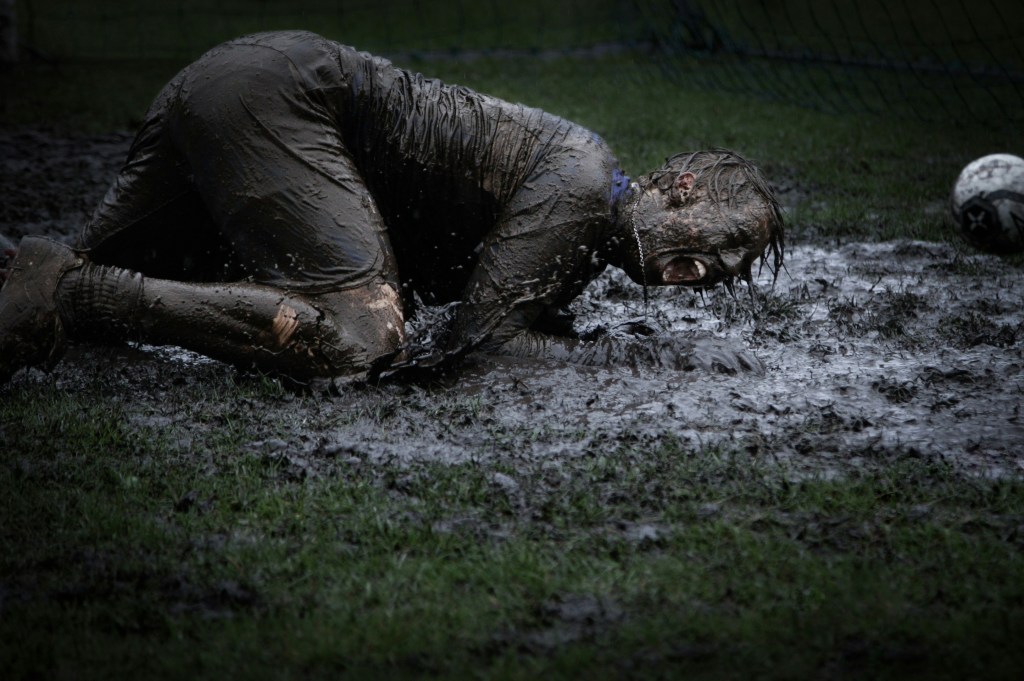
I am a woman fighting battles with my flesh every day, feeling like I’m crawling my way through sanctification mud but I am already seated with Him in heavenly places because He has named me so.

And if all of this is true of the Israelites then and of you and me now, then what is true of His Church?

“You yourselves like living stones are being built up as a spiritual house, to be a holy priesthood, to offer spiritual sacrifices acceptable to God through Jesus Christ.” (1 Peter 2:5)

“But you are a chosen race, a royal priesthood, a holy nation, a people for His own possession, that you may proclaim the excellencies of Him who called you out of darkness into His marvelous light. ” (1 Peter 2:9)

We have leaders falling off pedestals like someone knocked down a domino somewhere and we’re brawling on social media like scrappy boys in a school yard and we are holy and we are royalty because God has named us so.

(As a matter of fact I am aware of my run-on sentence issue. Sometimes my words can’t stop for punctuation.)

Paul tells us that God chose him to be an apostle before he was even born and then he went on to become a pharisee who persecuted the Church. But one day God knocked him down and made him an apostle to build that same Church… because God had named him so.

Oh man I hope this encourages you like it does me. I also hope it convicts you like it convicts me. My earthly view is my reality far too often, but if I’m singing open the eyes of my heart Lord then I should believe I’ll see things differently, right? If He opens the eyes of my heart then I’ll see what He sees and I’ll see what He’s named that I haven’t been able to see through my veil of flesh.

And if I see what He sees because He has named it so, I will believe for beautiful things for the Church and for you and for me. I’ll hold back judgment and offer grace instead because I see what we are from His throne and He offers us all grace in our becoming.

We are His Beloved. He has named us so.