
His Disciple: A Table for Sick Sinners

While Jesus was having dinner at Matthew’s house, many tax collectors and sinners came and ate with him and his disciples. When the Pharisees saw this, they asked his disciples, “Why does your teacher eat with tax collectors and sinners?”

On hearing this, Jesus said, “It is not the healthy who need a doctor, but the sick. But go and learn what this means: ‘I desire mercy, not sacrifice.’ For I have not come to call the righteous, but sinners.” – Matthew 9:10-13

Close your eyes and imagine the scene. It’s ok, just play along with me. Close your eyes. What do you see?

I see a table full of people I probably wouldn’t spend time around. I see the people our society hates, the ones we turn away from, the ones our religious spirit avoids.

And at the head of the table I see Jesus. Laughing, passing the green beans, telling stories. Loving the ones in front of Him because He knows how desperately they need what He has come to give them. A way out. Stripped of their filthy rags and given clean garments. Life. Love. Freedom. Redemption. Forgiveness.

It’s what we all need, but for some reason, the ones who have already had their time at the table of sinners with Jesus resent the ones who are drawn to that same table. And when the religious spirited people have the boldness to ask His disciples about it, Jesus slaps back with what we all need to hear.

I came for these. For sick sinners. I didn’t come for anyone who is already healthy. Do we get what He was saying? Maybe this will help us pick up the sarcasm in His voice – “There is none righteous, no, not one.” (Romans 3:10)

The only difference between us and the sick sinners around us is that we came to the table before they got there. We sat with Him, just as sick as they are, and found healing, forgiveness, and eternal life – all the things they need. The table for sick sinners is as much our table as it is theirs.

We are His disciples. The ones who get to watch Him heal the sick, deliver the oppressed, feed the hungry, and offer forgiveness to all of them, because we watched Him do it in us. Let’s choose to watch with joy, gratitude, and fascination rather than with scorn. Let’s invite sick sinners to the table, instead of questioning why they’ve come and why on earth is Jesus sitting there with them. Let’s get over our indignation that Jesus loves them the same way He loves us.

Father, forgive us for when we choose to bow to a religious spirit rather than to You. Teach us how to invite others to the same table where we found forgiveness and eternal life. Give us eyes to see people the way You see them instead of the way we see them.

His Disciple: Surrendered

And Jesus, walking by the Sea of Galilee, saw two brothers, Simon called Peter, and Andrew his brother, casting a net into the sea; for they were fishermen. Then He said to them, “Follow Me, and I will make you fishers of men.” They immediately left their nets and followed Him.– Matthew 4:18-20

To follow a rabbi… meant living with the rabbi, sharing life with him and taking part in the rabbi’s whole way of life. A disciple might accompany a rabbi on all his daily routines: prayer, study, debating other rabbis, giving alms to the poor, burying the dead, going to court, etc. A rabbi’s life was meant to be a living example of someone shaped by God’s Word. Disciples, therefore, studied not just the text of Scripture but also the “text” of the rabbi’s life.” – Edward Sri, Into His Likeness: Be Transformed as a Disciple

The life of an early disciple was a life of following close, not at a distance. They weren’t part of a crowd of onlookers. They wore the dust of their rabbi’s feet, and in order to do that, they had to leave their own lives behind.

Peter answered him, “We have left everything to follow you! – Matthew 19:28

I see it when I read the gospels, and again when I read Paul’s letters to the churches. There is a leaving that must happen in order to follow Jesus; a surrendering of my plan for my life, in favor of His. There is no way to read the New Testament and come away thinking that we still get to call the shots. That we decide the when, the what, and the where for our lives. Not if we’re His disciples.

What have I left in order to follow Jesus? This is the question, and part of it I can readily answer. My right to choose where I live and work has been surrendered so that He could put me where He wants me. My desire to walk away when something became too difficult, too painful even, so that I could let Him transform me through the difficult and the painful thing. To teach me to love difficult and painful people (and to realize that sometimes, I am the difficult, painful one). I forgave people I didn’t want to forgive, remained where I didn’t want to be, and left when I didn’t want to go.

But there is always more leaving to do. The temptation to take the reins is ever present, breathing down my neck. The desire to do what I want to do with my remaining years, which would involve laying on a beach everyday, mostly in silence. The thought that I could pick when and where I retire, or whether I even get to retire, is a wonderful thought indeed. But that’s not how following Jesus works.

He leads, I follow, and in that, my heart must reach the place of surrendering all the ‘I wants’ and ‘I needs’ that keep calling for me to do it my way. Surrender, not control, is what I signed up for. A life that pleases Him more than it pleases me.

If it weren’t for my desire to remain close to Him, I would not have made many of the choices I made in my faith journey. I would have lived where I wanted, worked where I wanted, kept only the relationships I wanted, walked away when it got hard, set way more boundaries around me… all of it. But I wanted to follow at His heels, not at a distance. I wanted proximity to Jesus, not just the identifier of “Christian.” And this is still my greatest want. To be near Him. To follow Him, even when it’s hard. He has become and remains my greatest obsession, worth every bit of leaving and surrendering and hard thing I’ve had to do.

Today, I am challenged to look at my life again and ask Him where I am still trying to maintain control. To assess whether I’m still following Him, or if I’ve veered off to follow the many voices I have access to in this life, or even if I’m just simply following myself. Am I still His disciple, or am I just a Christian in the crowd?

It is good to look around at our lives and figure out if we are still following Him, or just acknowldging Him.

Father, help us be honest with You and with ourselves. Turn us, if we have veered off. Call us up if we have fallen behind. Remind us that You, not this earthly life, are our greatest reward, and that You are worthly of our lives laid down. Help us become people who are fully surrendered to You and not to this world or our flesh.

Thanks for reading. See you next time!

His Disciple: The Search & The Priority

Intro

There is a narrow path and a broad path, of that, I’m sure. Not just because Jesus told us so, which would have been enough for me, but because I see these paths. I see what leads to life, and what leads to death. But through the blurry vision of just past middle-aged eyes, I see something else and it stirs emotions in me that I haven’t been quite sure how to manage.

I see those who chose the narrow road now attempting to widen that road. Cutting away things that make it harder to walk, things that make the narrowing. Redefining sin. Cutting out whole parts of God’s words. Twisting what is left to fit nicely over flesh that wants control of the ship and I am grieved somewhere deep and wondering if I too have a machete in my hand.

So I am doing the only thing I know to do. I’m going to search the scriptures for what it looks like to be a true disciple of Jesus. A follower who walks a narrow road behind the One who walked it first. I’m doing this for two reasons: to let God uncover my own heart in this matter, and to know how to pray for others who are widening what must remain narrow.

Let’s Go

We hear Him speak for the first time when He was twelve, after a frantic search by His parents found Him in the temple courts “sitting among the teachers, listening to them and asking them questions.”

And He said to them, “Why did you seek Me? Did you not know that I must be about My Father’s business?” Other versions say “My Father’s House.”, but in either version I see the same thing:

Jesus was, and is, always about His Father’s business (and personally, I think the Father’s business is His house, which is His Church). Regardless, what Jesus is not always about is our business. Our agenda. Our vision. Our dreams and goals and ideas. Listen to what He said when Peter attempted to rebuke Him for saying He must suffer—

“But He turned and said to Peter, “Get behind Me, Satan! You are an offense to Me, for you are not mindful of the things of God, but the things of men.” (Matthew 16:23)

Strong statement made to someone Jesus loved. But let this sink in: Peter thought he had in mind the right thing. He knew in part, saw in part, but thought he understood in full. We are Peter’s brothers and sisters, cut from the same cloth. I just don’t know that very many of us would admit to it.

From the first recorded words of the Son of God we get our first glimpse of His priority, and that priority never changed.

 Jesus said to them, “My food is to do the will of Him who sent Me, and to finish His work.” (John 4:34)

“For I have not spoken on My own authority; but the Father who sent Me gave Me a command, what I should say and what I should speak.” (John 12:49)

“I can of Myself do nothing. As I hear, I judge; and My judgment is righteous, because I do not seek My own will but the will of the Father who sent Me.” (John 5:30)

 “Father, if it is Your will, take this cup away from Me; nevertheless not My will, but Yours, be done.” (Luke 22:42)

If I desire to be His true disciple, my priorities must align with His and that, dear friend, is easier said than done. As much as I wish it were not true, self-interest runs deep through my heart, filled with my preferences, my assumptions, and my wants. Oh, they aren’t presented that way. No sir. Sometimes they’re labeled as my calling, how I’m wired, my giftings, my mission.

So this is the first stop on my search for true discipleship. To wrestle with my own heart and what it wants and why it wants it and most of all, is it willing to give all of that up for what He wants? To let Him strip away the stuff that gathers over time that tends to make me forget what I know to be true: The whole world and everything in it is about God. The wide road makes it about us.

Lord, have Your way in me. Let something shift in me that brings down the idol of self-interest, self-priority, and self-preservation. I want my heart to align with Yours, so Jesus, show me Your heart.

We’re just getting started. Thanks for reading. See you next time.

But Some Doubted

Then the eleven disciples went away into Galilee, to the mountain where Jesus had directed them. When they saw Him, they worshiped Him; but some doubted. Jesus came near and said to them, “All authority has been given to Me in heaven and on earth. Go, therefore, and make disciples of all nations…

Matthew 28:16-19

Judas was gone, so they were down to eleven. Eleven would eventually become twelve when they add Matthias. All but one of these twelve men would be martyred for their faith. Only John would survive, but would be exiled to Patmos, an island inhabited by criminals and political prisoners.

But as they stood here on this mountain, looking at the man they watched die and be buried in a tomb, some of them waivered. Some of them were uncertain as to what they were seeing. Some of them wondered if it could really be true. Some doubted. And yet, Jesus commissioned them all to go and make disciples.

At some point, their doubts became faith. How can we know this? Because people don’t risk, and ultimately give, their lives for something they doubt ever took place. I mean, I wouldn’t, would you? Would you go into a place that kills Christians and share the gospel, which includes the resurrection, if you doubted it happened?

We all doubt, at some point. We may not doubt the resurrection, but maybe we doubt when we’re told that someone was completely healed of an incurable disease. Or when someone gives a testimony of seeing a deformity become undeformed in front of them. And don’t we often waiver between doubt and belief when we hear the stories that come out of places like Mozambique of dead bodies being raised to life? We want to believe it’s true, but doubt shows up anyway.

Some of us doubt things a little closer to home. Maybe we think our church is too dead to revive. Our bank account is too low to pay our bills. Our health is too far gone to be healed. Maybe our loved one has wandered too far to be brought back or we’re too broken to be of any use to the Kingdom of God. See what I mean? We are some who doubt.

He knows our doubts just as surely as He knew the “some” of His own disciples who doubted. But like them, He commissions us anyway. Calls us to go, to make disciples, to lay down our lives. He still fills us with His Spirit and His gifts and puts us into His body in whatever way He sees fit. Our doubts do not deter Him from calling us to keep following and keep going.

If Jesus doesn’t disqualify us because of our bouts with doubt, then who are we to disqualify ourselves?

Some doubted. Some still doubt. It’s ok. Let’s tell one another, pray for one another, and then go make disciples anyway.

genesis 23: cost

The negotiations between Ephron and Abraham, and Abraham’s insistence on paying for the burial site reminded me of something King David said in 2 Samuel 24:24:

“No, I insist on buying it from you for a price, for I will not offer to the Lord my God burnt offerings that cost me nothing.”

It was a different time and place, a different culture than the one we live in, but I’m not sure that’s what makes the difference. I think it’s a different heart that does not seek to get something for nothing. A different heart that believed a burial place for his wife was worth paying the cost, a different heart that believed a sacrifice made to God should cost us something.

The culture of the world has trained us to barter for the lowest possible price to pay for anything, with “free” being the ultimate win.

The culture of heaven tells us that what is worth having is worth paying the price. 

How often do I seek to get something for nothing? Has that become my mentality – to try to pay as little as possible for something?

Have I been offering God something that cost me nothing? By cost, I’m not just talking about money. I’m talking about comfort, time, pride, plans I’ve made, dreams I’ve had. How about my rights? The right to be angry, the right to an apology, the right to be right, the right to be treated fairly.

The gospel of heaven tells us that following Jesus will cost us. The gospel according to the world says we can get it for nothing.

Which gospel am I living?

I live in a culture that values something for nothing. But I don’t want the heart of this culture, I want the heart of Abraham and David. The heart of heaven.

I want to make extravagant offers of love and worship and compassion that cost me as much as I have to give. I want to say that following Jesus has come at a price and that price has been more than worth paying.

I will not offer the Lord my God something that cost me nothing.

what i’m learning at the fire hydrant

fire hydrantI had no idea what it would really be like, this year devoted to going deeper with God. They tried to warn me. They told me the discipleship training school would be like trying to drink from a gushing fire hydrant.  But, I’ve never tried to take a drink like that, so it was like trying to explain childbirth to a woman pregnant with her first child. All it really ends up doing is scaring the stuffing out of her, because childbirth has to be experienced, not explained.  This can also be applied to drinking from a fire hydrant.

But now I know.  The gushing water is overwhelming, and you miss a lot of what is pouring out. But what you are able to drink in is glorious. What you drink in brings the revelation that you were dying of thirst.  What you drink in makes you abandon trying to catch water in your hands and compels you to go in face first. Yeah…it’s that good.

I love words, but even I don’t have enough of them to try to explain all that God has been teaching me and doing in me.  On top of the training school, I just spent a week receiving training in the core values of my church; teachings I would have paid money to receive at a conference. Yeah…they were that good.

So, I will try to pour out drops of what is being poured into me. Drops, in the form of direct quotes from some of the teachings, along with my own quotes, written in flurries into my journal during the sessions.


“If we lower the bar so that we can live up to it, we miss the whole point, which is total dependence on God. God never lowers the bar.”


Instead of “what do I do?”…it needs to be “what do I believe?”. We behave what we believe.


“The capacity to perform the things of the Kingdom is directly tied to the depth of our intimacy with Jesus, not with the breadth of our knowledge.” 


“We will never get to the end of ‘in Christ’.”


“Insecurity produces dominance.”


“We can preserve our physical virginity, but prostitute our hearts.”


“The ulterior motive of God is to bless you, not to use you.”


I didn’t ‘find‘ Jesus. I ran from Him and He pursued me and caught me.


“I refuse to allow the praises of men or the revilings of men to deter me from the will of God.” 


“Are you deaf enough to the opinions of man, to fulfill the call of God on your life?”


“The most deceptive people in the world are deceived people who think they are speaking truth.”


I was made a sinner without sinning, and I was made righteous without being right.


“Judgement came after only one sin. Grace came after many sins. Which is stronger?”


“Do not make assumptions. They make bad theology.”


Brokenness…a condition of the heart that is becoming aware of its utter and complete need for God alone.


“When you [walk in] sin, something dies, and you don’t get to choose what dies.”


Brokenness is a lifestyle, not an event.


Will I fall on the Rock, or let the Rock fall on me?
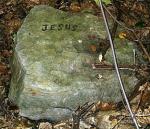
Rock


I don’t want to miss the point of a position of authority.  It is not about me, it is about raising others up.


Underleaders:  Are passive. Only do what is asked of them.   Overleaders: Aggressive. Do too much. Usually start out prideful.  Both are marked by insecurity. Collaborative leaders:  Humility dominates. They come with a vision. They ask “what do you think?”.

Pride will cause me to fight for my gifting.


I am an ambassador. I represent God everywhere I go.


            The Kingdom cannot come without the Gospel.


                      The Kingdom coming means hearts are transformed. A Kingdom means there is a King.


                                    “There are greater places in God than we have ever been.”


Fire will come upon my works. Only those done for Jesus will survive. Am I doing things to feel better about me? To gain a position? To promote me or my gifting? Motive matters!


“We will not be fascinated with the gifts, but fascinated with Jesus.”


“It is more about reliance on Him than development in me.”


For every “yes” you give to God, you give 1,000 “no’s” to the world.


“Life is at work in places because death is at work somewhere [in us].”


“None of us has the capacity to be the full revelation of God.”

 

captive

“Living in bondage will cause us to forget our identity, and God’s identity.”


We cannot filter our beliefs through experience. 


We cannot separate the voice of God from the Word of God. The more we are grounded in His Word, the more we will hear His voice.


If what drives us is the need to be somebody, we will not complete the call of God. It can’t be about us having a cause or a mission…it must be about God getting glory and people getting His salvation. It has to be about Him and Them.


I cannot confuse identity and mission. If I do, then when I fail (and I will), it will shake me. I will determine that my ministry success is my worth. And, I will reject what God speaks if it does not line up with what I believe to be my calling, ministry, gifting, etc. 


“God, what is the next step of obedience for me?”


Fulfilling the great commission means putting a burden for others above my need for identity.


I can’t look at God’s mission through the very narrow lens of my part in it. I have to look at the whole mission, and then ask for my part.


I don’t need to hear, “well done, good and powerful servant”, or “well done, good and perfect servant”. Just let me be found faithful!


“What is God’s will for my life?” needs to be “what is God’s will?”.


Do I see what I have as mine, or as God’s?


“Any dingbat can be a problem finder. Leaders find solutions.”


Indicators of where my treasure is:  what I spend my time on; what I talk about; what I am unwilling to give up; how I live my life.


Do not despise even the smallest provision.


I need to grow deep enough in God to handle not getting what I want when I want it.


They’re just drops of water. Scribbles from the journal of a thirsty woman who has found herself, by the grace and goodness of God, positioned in front of a fire hydrant.  There is more, so much more, that I haven’t dripped out here.

Next weekend, we will go on our Fall Outreach, where we will share the gospel in Norman, Oklahoma, with our church plant there. In the spring, we will go on an international outreach to a location still unknown.

In between those two events, I will be found face first at the fire hydrant.

from disgrace into grace

rebuilding-the-wallFive women sitting in a living room, taking turns reading from Nehemiah. We are studying that book because in the rebuilding of a wall God can speak much about rebuilding lives. And in that second chapter, starting right there in that 17th verse, something speaks to me.

‘Then I said to them, “You see the trouble we are in: Jerusalem lies in ruins, and its gates have been burned with fire. Come, let us rebuild the wall of Jerusalem, and we will no longer be in disgrace.”’

Disgrace. (It rhymes with shame.)

Nehemiah saw his broken city with broken walls, and women see their broken lives in much the same way. And in the time it took to inhale that 17th verse something grabbed hold and won’t let go.

The only way out of disgrace is to step into grace.

And I find myself stepping in, in more ways than one. As I sat on that couch in that circle of women, I had no idea that God was searching something out in me. Something that caught my heart by a painful surprise.

Later that night something was said that pulled a trigger and a dam broke open and disgrace spilled out, and I learned that scar tissue won’t hold a wall together because grace is the mortar of God’s rebuilding.

running awayI discovered, as I tried to stop the flow of pain and tears and years of pent-up shame, that the city walls begin to fall into ruin when a little girl is held to a secret as hands go where hands aren’t supposed to go. Shame makes a little girl feel alone and somehow ‘wrong’, and in her attempts to feel ‘right’ again she runs as hard as she can away from her pain, only to discover she has just been running with her pain. Until one day she falls in a heap. Disgraced.

at the cross

But God. He knew where she would fall and He made sure it was at the feet of Grace.

(Because sometimes the only way out of disgrace is to fall into Grace.)

For days now God has been pulling away scar tissue and putting grace in its place. And for once, I understand His timing. Because the women who are studying Nehemiah are the staff at Grace House. And this is where God has me now, about to step into full-time ministry to women with broken walls. To cities in ruin. And I needed to know that God doesn’t rebuild with scar tissue, but with grace.