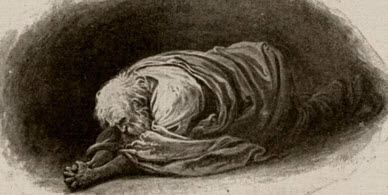
genesis 22: tested (and Eva Love)

“After these things God tested Abraham and said to him, “Abraham!” And he said, “Here I am.” He said, “Take your son, your only son Isaac, whom you love, and go to the land of Moriah, and offer him there as a burnt offering on one of the mountains of which I shall tell you.”

The proving grounds of faith are no comfort zone. They are not the green pasture and still water places. The testing pushes and pulls at our soul, demands we hand over what we call ours, what we’ve fought for and waited for.

Even what was promised to us.

It isn’t hard to make our offering to God when there is no pain in the offering. But often these proving grounds are also killing fields and the things that we must offer up there are painfully costly. There is only one way things get handed over in that place.

By faith Abraham, when he was tested, offered up Isaac…” (Hebrews 11:17)

Our obedience to the testing of our faith will reveal the boundaries of our faith. And maybe that’s the point of the testing.

“Jesus said to him, “If you would be perfect, go, sell what you possess and give to the poor, and you will have treasure in heaven; and come, follow me.”When the young man heard this he went away sorrowful, for he had great possessions.” Matthew 19:21-22

He wanted eternal life, and he followed the ten commandments, so Jesus told him to get rid of his money. That was the boundary line. He had faith enough to follow the rules, but it did not extend to giving up what meant the most to him. Instead, he walked away.

  • We will not willingly surrender what we believe is ours, not God’s.
  • We will not give what means the most to us if we do not trust the character of God.

There is a family that is deep in the proving grounds of faith. Their daughter is Eva Love and here is a quote from her dad, Dugan Sherbondy:

” In addition to surrendering my daughter, I’m also now surrendering my expectations or desire to control what happens. It’s amazing how much effort it’s requiring to intentionally wait like this. It’s like I have to take a thousand purposeful Sabbaths each day to ensure I’m quieting my spirit and casting my cares upon Jesus.”

This family is publicly living their pain. They have invited all of us to journey with them, to watch them walk through the most painful place they’ve ever been, and see what a faith that surrenders what is most precious looks like. Please join believers around the world as we continue to wait and pray and believe God for Eva’s complete healing!

Visit Dugan Sherbondy’s FB Page

genesis 21: Cast It Out

From promise given to promise fulfilled: 25 years.

Had they stopped waiting? Were they satisfied with their version of the promise they named Ishmael?

Didn’t they know that a God-promise is not fueled by human power?

So the son of promise is here, being birthed in the place where the son of flesh (Ishmael) is already living. These two sons will be at odds until the end of time. For us, they represent Law and Grace. Freedom and slavery. Paul speaks to all of that in Galatians, chapter 4. 

But I am staring at what Sarah said to Abraham in vs. 10 of Genesis 21»»

And it sounds like this to my ears:

Cast our what was of the flesh, for nothing of the flesh will share in the inheritance of the promise.

Every ounce of what I’m doing in an attempt to be right with God on my own, everything I’m doing to try to bring about the promise or plans of God on my own. All of it. Cast. it. Out. 

The promise of God is that I am saved by grace, through faith. So grace and law are always fighting for dominance in my belief system. One makes me free, the other makes me a captive.

My flesh will always be at odds with grace. It will always try to bend toward the law and self. Grace will always bend toward God. Flesh puts my eyes on me and what I can do. Grace always pulls my gaze to God and what He can do. 

While I know these things, the challenge is always in the follow through. To choose to believe God more than I believe in my own ability to make something happen, and then to wait on God.

To cast out my Ishmael, because Isaac is here.

genesis 20: fear

Big picture:  God called Abraham to become the father of many nations, to be a prophet and a patriarch, and to father the line that would bring forth the Messiah. 

Within the scenes that make up that big picture, we see Abraham’s humanity, particularly his fear of man. 

Abraham’s trust and faith in God to fulfill His promise to him did not necessarily extend to every situation. When he came up against pagan kings who could kill him to take his wife, he leaned on his own wits to save himself. Himself, not Sarah. Lest we think Abraham was perfect. 

But we need to find ourselves in this story, lest we think ourselves more holy than Abraham.

Being alone. Being without. Being judged. Being seen as less than. Failure. These are our fears, if we are brave enough to admit it. They are the taskmasters in our lives, and most of them stem from one fear that holds a large whip. Fear of man. Raw honesty compels us to confess that, often, the fear of man in our lives is bigger and louder than the fear of God.

How does that change what Abraham did? It doesn’t. But if we ask ourselves a simple question, and answer it with brutal honesty, we will discover a comrade in Abraham and move from judging him to understanding him, and us:

What have I done in response to my fear?

Who has been allowed in my life, not because they were right for me, but because I didn’t want to be alone? What, or who, have I sacrificed so that I could have more money, more things, more prestige, more of what someone else has? How have I sacrificed authenticity to avoid being judged? How hard have I worked to maintain an image that isn’t true because I fear what others would think if they knew the truth?

How much of the bondage I’m in is a response to fear?

Abraham feared being killed, so he put himself before his wife. If we could stand to be honest with ourselves we would find we are the children of Abraham in more ways than one.

But God.

He is committed to His plans and to His promise. He continues to rescue us, intervene for us and increase us.

genesis 19: fire

the men of the city

the men of sodom

both young and old

all the people

to the last man

surrounded the house

Not just some. Not just a little bit of sin. No isolated incidents. Sodom was full to the brim with wickedness. Overflowing. Young and old. All the people. Sexual sin.

Not a lack of hospitality. Sexual sin. As a writer, as a lover of God’s Word, as a Christian, I cannot talk about Genesis 19 and gloss over the sin of Sodom. It was sexual sin in the form of homosexuality. 

But I don’t want that to be the whole point. I don’t want to just stare at the sin of chapter 19. That’s not why I’m here.


I want to stand on a hill and watch what is actually happening for just a moment.

“Then the Lord rained on Sodom and Gomorrah sulfur and fire from the Lord out of heaven. And he overthrew those cities, and all the valley, and all the inhabitants of the cities, and what grew on the ground.”

I’m a little in awe of the God that holds that kind of power. This God is real, and He has the power to rain down fire on a wicked city, anytime He feels like it.

He also has the love to come down from heaven and die on a cross so that our wickedness will not keep us separated from Him.

He is kind and He is fiery. There is no end to His love, but there will be a stopping point to His grace. He is all powerful and we should look upon Him with fear and awe. He is all loving and we should look upon Him with deep, overflowing gratitude for the price He paid for our sins. 

He is not one or the other. He is not fierce without love. He is not love without a fierce hatred for sin.

He is not just full of grace, He is full of power.

Mountains melt like wax before Him. All of creation obeys His will, except one. Only mankind stands in defiance to this great, powerful, fire raining God who loves us. We are the only ones who shake our fists, refuse to acknowledge Him and have no awe of His power. We are the only ones who look upon Him who was crucified, and refuse to let go of our sin.

We remember that He is love and forget that He is fire.

That’s what I saw when I stood on a hill and watched Chapter Nineteen.

genesis 17: promise

When Abram was 75 years old, God promised him children. Twenty-four years passed since that conversation, and then God appeared.

“I am God Almighty…” And what would a man do but fall on his face?

God wants Abram to know that He hasn’t forgotten His promise and, in fact, is now going to require him to bear the sign of that promise. And from then on, every time a Hebrew boy is circumcised, it is a reminder of a covenant God made with a man too old to father children.

For in Christ Jesus neither circumcision nor uncircumcision avails anything, but faith working through love.” – Galatians 5:6

God’s covenant with Abraham served its purpose, but it was temporary. We now have the New Covenant, an eternal covenant of salvation through the finished work of Christ on the cross.

What is the sign of this new covenant God made with a people unable to save themselves?

“And the Holy Spirit also bears witness to us; for after saying, “This is the covenant that I will make with them after those days, declares the Lord…” (Hebrews 10:15)

Circumcision bore witness to the covenant God made with Abraham. So today, the Holy Spirit bears witness in us.

God promised Abraham many descendants when Abraham & Sarah were unable to bear children, and that same God promised us salvation when we were unable to save ourselves. I believe the Holy Spirit dwelling in us is a continual sign of that promise.

“He anointed us, set his seal of ownership on us, and put his Spirit in our hearts as a deposit, guaranteeing what is to come.” – 2Corinthians 1:21-22

The Holy Spirit is our continual reminder that we cannot, but God can. We were barren but will birth nations. We were lost but will inherit eternity.

Because God keeps His promise.

genesis 16: return

Interesting, hard chapter in the story. So many emotions and dynamics going on.

Sarai’s desperation for a child. The injustice against Hagar. Abram’s unwillingness to mediate, with his “do what you want with her” attitude. Hagar’s contempt for a woman who would have her bear a child she would then have to hand over. Sarai’s mistreatment of Hagar and Hagar’s desperate escape to the desert.

We see the frailty of humanity. The weakness of fallen people trying to get what they want from this life.

And only the names have changed. Humanity is still frail, still fallen, still trying to grab life on their own terms.

But now I’m going to step on toes, I think.

Hagar was clearly a victim, being mistreated and some would even say, abused. And no matter how much we don’t want to, we must hear what the Lord says to her –

“Return to your mistress and submit to her.” (vs. 9)

I will tread lightly, but I will still tread here. Because I’ve lived it. I’ve heard the word “return and submit” and let me tell you, we’re talking about hard to the bone words to hear.

As much as we don’t want to say it or believe it, scripture makes it very clear that sometimes (please do not read the word ‘always’ there) God calls us to return to or remain in a situation of mistreatment.

“What about physical abuse?” I don’t know, ask God. “What about the kids?” I don’t know, ask God. “What about…” I don’t know, ask God. There’s no formula. God doesn’t have the exact same plan for everyone’s life. Your final destination and mine may be the same, but the journey there will look different. This is why we must seek God for ourselves, with a heart of obedience. All I’m saying is that we cannot hold onto a false belief that says God does not ever want us to suffer mistreatment, and therefore we are entitled to run from it.  

Wrestle it out with God. Kick and scream and dig in your heels. But at some point, we all have to deal with the truth that God does not view our sufferings through our lens. His lens is eternity and divine purpose. Ours is usually self-preservation, comfort, and control, mixed with a sense of entitlement and a right to be happy.

He is the God who hears you. He is the God who sees you. He is the God who loves you. But He is also the God who is looking at your situation from within eternity.

And sometimes (not always), He will tell us to return to what we’re running from.

genesis 15: covenant

Let’s listen to just the conversation between God and Abram –

God: Don’t worry, I will shield you, and your reward will be great.

Abram: What reward will You give me, since You have not given me an heir? In fact, a servant is going to inherit everything I have.

God: No he won’t. You will father a child. In fact, come outside. Look up. Can you count the stars? No? Neither will you be able to count your offspring, there will be so many of them.

And Abram believed that the Creator of all things, the Holy One of Heaven, had just made him a promise that He would keep.

And then He made the promise even bigger.

“See this land? I’m giving it to you and to yours for always.”

“How can I be sure that I’m really going to possess this land?”

“Go get the animals.”

In the Old Testament, when two people wanted to enter into an agreement or contract, they “cut covenant”. They would cut the sacrificial animals into two halves, and then they would both walk between the pieces together, as a way of “signing a contract”.

Abram would have known what was coming next. He and God were about to “cut covenant” and it was not unfamiliar. But he didn’t know that God cuts covenant like no other.

As Abram slept, God walked alone through the pieces.

And as we were dead in our sins, Jesus hung alone on a cross.

Cutting covenant with us.

What kind of God is this who walks alone through the sacrifice to be in covenant with me?

What do I do with such goodness? How do I hold this kind of mercy? What, dear Lord, is the response that heaven is looking for from earth?

And Abram believed that the Creator of all things, the Holy One of Heaven, had just made him a promise that He would keep.

“…and He counted it to him as righteousness.”